Posts in: FutureOfCooperation

tl;dr: Development organizations must align their operations with their public benefit missions, ensuring that institutional interests don’t compromise community empowerment. #FutureOfCooperation

💡 The development sector typically presents itself as prioritising the public good. However, as a multi-billion dollar industry, it harbours significant vested interests. Institutions tend to adopt business models aimed at self-preservation and growth. While this may be justifiable at an organisational level, it can seep into operational practices and undermine principles such as “helping people to help themselves” and the goal of becoming redundant as catalysts for change.

Some considerations:

  • Align Incentives with Public Benefit: Design funding models that reward measurable, tangible public impact instead of institutional growth alone. Results-based financing and community-driven approaches can realign priorities effectively.
  • Build Locally Embedded Solutions: Collaborate with local stakeholders to design models that address actual community needs while ensuring long-term sustainability.
  • Resilient, Adaptive Institutions: Diversify revenue streams and foster an agile organizational culture to balance innovation, adaptability, and sustainability.
  • Leverage Technology and Data: Use data-driven decision-making and technology to enhance transparency, engage communities, and create feedback loops that keep public benefit at the core.

By aligning incentives, building locally embedded solutions, fostering resilience, and leveraging technology, institutions can uphold their mission and drive sustainable, meaningful change.

A lighthouse beams its light across stormy seas toward a small, distant boat, with a coastal village nestled nearby.

tl;dr: In #DevelopmentCooperation, most structural challenges are #complex. Unfortunately, the sector is not well prepared to understand and work in the complex domain. #FutureOfCooperation

🌍 In development cooperation, especially when it comes to tackling underlying structural challenges, initiatives operate in the realm of complexity. Understanding this is crucial for effective decision-making.

In the complex domain, cause and effect are only apparent in hindsight, requiring adaptive and emergent solutions. The Cynefin Framework helps to make sense of the world in which one wishes to make a difference and explains an initial distinction between Ordered (simple as well as complicated), Complex, Chaotic. 🔍

Characteristics of the complex domain:

  • Unpredictability: Outcomes are uncertain and traditional project management approaches may not be effective.
  • Emergent solutions: Effective strategies emerge through experimentation and learning rather than the application of best practice.
  • Need for adaptability: Flexibility and responsiveness are essential to navigate the changing landscape of challenges (and opportunities) that initiatives face.

Nevertheless, development cooperation continues to be based on an understanding of the world as an ordered domain, sometimes unknowingly in a state of confusion. The sector needs to get real:

  • Iterative approaches: Conducting safe-to-fail experiments - even many in parallel - allows for learning and adaptation, leading to more effective interventions.
  • True stakeholder engagement: Working with local communities and stakeholders is essential to understand the nuances of complex environments.
  • Continuous learning within individual initiatives: Ongoing evaluation and adaptation are needed to respond to emerging patterns and challenges.

🌱 It would be very helpful if sector leaders were to recognise the complex nature of structural challenges in development cooperation. This would allow appropriate action to be taken.

A diagram with four labeled sections, Complex, Complicated, Chaotic, and Simple, arranged around a central cloud-like shape.

🌍 Before we look at the #FutureOfCooperation, let’s clarify what we talk about.

#DevelopmentCooperation is about supporting the economic, social, environmental and political development of countries, especially those classified as developing nations.

Unlike #HumanitarianAid, which provides immediate relief during crises, development cooperation focuses on long-term improvements in living conditions and sustainable development goals.

Key characteristics include:

  • 🎯 Alignment with development priorities: Initiatives are framed in narratives that claim to achieve specific goals, such as the Sustainable Development Goals (SDGs).

  • 💡 Non-profit orientation: Activities are designed to benefit communities without seeking profit. However, players in the sector follow certain business models to cover costs and ensure long-term existence in this field.

  • 🌱 Addressing structural challenges: Efforts prioritise the needs of developing countries to tackle underlying issues. This is obviously a good thing, but also very difficult to achieve.

Stay tuned for more information on the #FutureOfCooperation, including discussions on the Humanitarian-Development-Peace (HDP) Nexus, which aims to link the humanitarian and development sectors.

TL;DR: Development cooperation tackles long-term global challenges, 🎯 claiming to be aligned with goals like the SDGs, 💡 prioritizes public benefit, yet with models that secure the existence of the institutions involved, and 🌱 aims to address deep-rooted issues in so-called developing countries, despite its complexity.

A postage stamp from 1965 features two hands shaking inside a laurel wreath, symbolizing international cooperation under the UN. Bureau of Engraving and Printing. Designed by Herbert M. Sanborn and Olav S. Mathiesen., Public domain, via Wikimedia Commons

tl;dr: New name, same game? Germany’s development policy faces calls for reform. #FutureOfCooperation

Just as I am about to launch a series on the future of international cooperation, reports emerged in the German press about a strategy paper from the Federal Ministry for Economic Cooperation and Development (BMZ). The paper, reportedly circulated among numerous NGOs, states: “Development aid was yesterday.” For instance, it suggests renaming the ministry from “Federal Ministry for Economic Cooperation and Development” to “Federal Ministry for International Cooperation.” (Table.Media - German, paywall)

Two things come to my mind:

  1. Terminology matters: If the ministry has indeed used the term “development aid”, it is referring to a concept that is outdated in its own discourse. A more apt headline might have been “Development Cooperation was yesterday”, although that might have appeared too bold. 
  2. A decades-old déjà vu: Almost ten years ago in 2015, a think tank with good relations to the ministry, now known as the German Institute for Development and Sustainability (IDOS), similarly claimed that “development aid was yesterday”, prompted by a British report on “beyond aid”. Despite some vague recommendations in the paper, there has been little substantive change in the way development cooperation is done in Germany. Notably, in the United Kingdom, the relevant ministry was part of the Foreign Office during this period. 

These discussions signal the considerable pressure on this policy area. It’s crucial to critically assess what is needed in terms of substantive change to avoid rebranding efforts that are merely symbolic gestures.

The image shows the letters BMZ formed from glowing clouds in a stormy landscape.

tl;dr: Launching a series of posts on challenges and possible reforms in government-led international cooperation; constructive input is very welcome. #FutureOfCooperation

International cooperation may not be a central topic in the current German election campaign, but related issues like security, climate, and trade policy are in focus. Broader trends also point to potential disruptive changes in this sector in Germany and growing momentum globally.

Based on years of experience in this area, I’m starting a series of short posts to highlight key aspects of this topic.

I’ll look at questions like

  • Is there a need for reform and why?
  • What has delayed change?
  • What areas need reform?
  • What collaborative models might improve outcomes?
  • How would reforms affect the institutions involved?

I’d like to hear your thoughts! Constructively share your questions or insights on reforming international cooperation in the comments.

The image symbolizes global cooperation, showing a globe held by diverse hands within a jigsaw puzzle. It highlights interconnected issues like climate change, trade, and security, with question marks suggesting unresolved challenges.

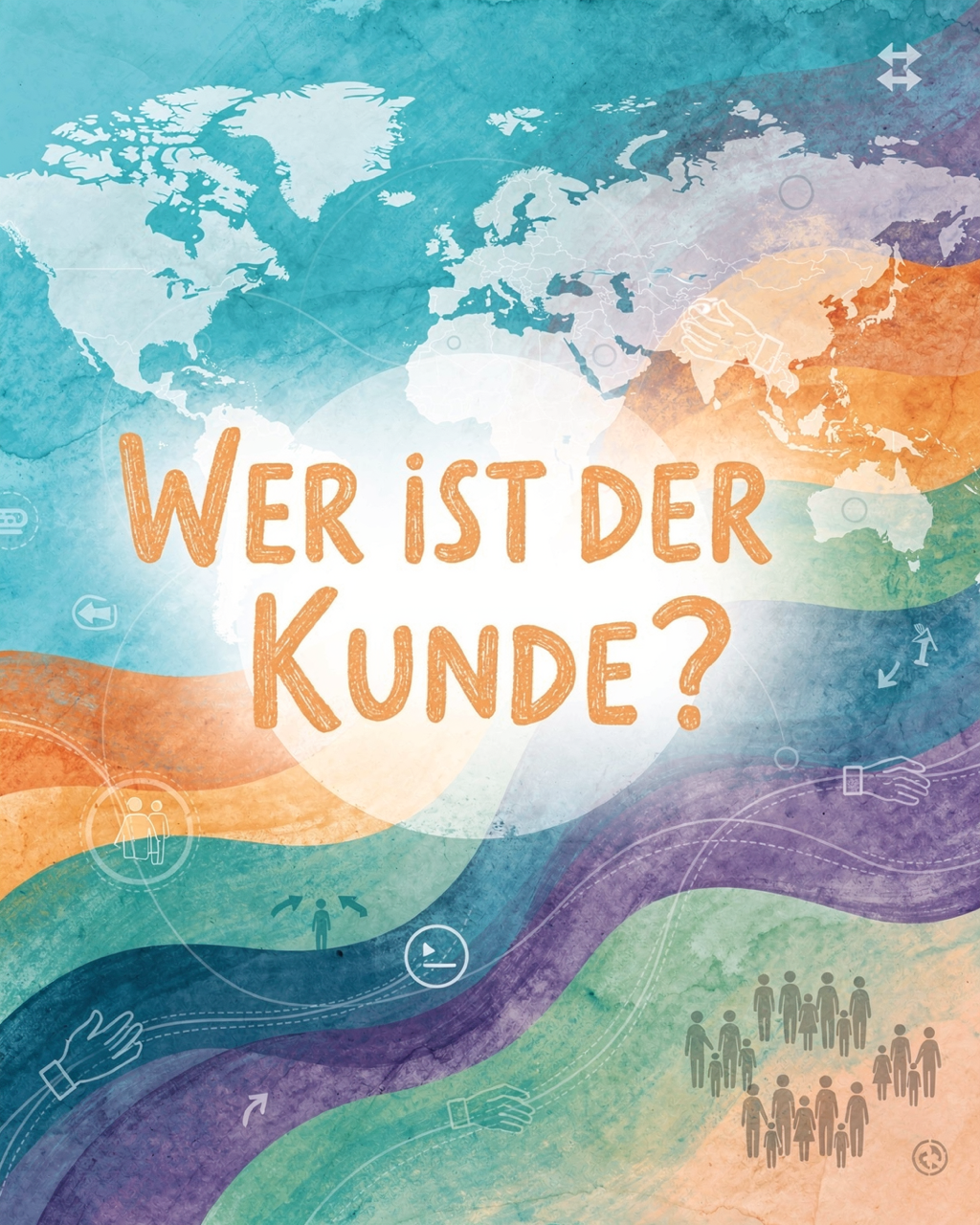
Eine scheinbar einfache Frage bringt Führungskräfte in deutschen Umsetzungsorganisationen der staatlich finanzierten #Entwicklungszusammenarbeit oft ins Stocken: „Wer ist der Kunde Ihrer Organisation?“ Meine Beobachtung: Je höher die Hierarchieebene, desto schneller und klarer fällt die Antwort aus – „das Ministerium“, also die Quelle der Finanzierung.

Doch wer steht wirklich im Mittelpunkt? Sollten es nicht die Empfänger:innen sein – die Menschen und ihre Institutionen, für die die Zusammenarbeit wirken soll?

In der Praxis spielt diese Perspektive kaum eine Rolle. Und das wird zum #Problem: Denn die deutsche Entwicklungszusammenarbeit will sehr vieles gleichzeitig erreichen – Armut und „Fluchtursachen“ bekämpfen, deutsche Unternehmen bei verantwortungsvollen Investitionen unterstützen und die Beteiligung von ressourcenarmen Ländern an globalen öffentlichen Gütern stärken. Der Versuch, diese unterschiedlichen Ziele mit denselben Strukturen und Methoden zu verfolgen, führt zu Widersprüchen, Ineffizienzen – und gefährdet letztlich das System selbst.

Es braucht einen Perspektivwechsel: Weg vom Fokus auf Mittelvergabe in starren bürokratischen Verfahren, hin zu klaren Leistungen und deren überzeugender Vermittlung. Wie das gelingen kann? Darum soll es in den nächsten Beiträgen gehen. #InternationaleZusammenarbeit #FutureOfCooperation

Eine farbenfrohe Illustration zeigt eine Weltkarte im Hintergrund mit dem deutschen Text „Wer ist der Kunde?“ und verschiedenen grafischen Symbolen, die für globale Kommunikation und Menschen stehen.

Innovation can’t wait. Development cooperation must break its self-referential cycle now. #FutureOfCooperation

For more on this, check out my blog